no gender needed | 2018.02.27

The Left Hand of Darkness by Ursula K. Le Guin | Review

Le Guin, Ursula K_The Left Hand of Darkness

Publication: New York : Harper & Row, [1980], ©1969

Genre: Science Fiction

Pages: 213

Formats: Paperback, Hardcover

Source: MCL

Let’s talk about world-building, shall we? To start out: What if gender weren’t a thing? No, seriously. Don’t glaze over that too quickly. What . . . if . . . gender . . . weren’t . . . a . . . thing? Well, there goes chauvinism right out the window. But also, there goes feminism and “nagging wives” and “distant workaholic husbands” and pay inequality, not to mention prescribed and presumed roles within the work place, the home, social engagements, everything, baby! And (this is my favourite part) there goes all the pent-up anger at all these bits of our anthropology that we’ve been struggling against or clinging to for, well, the existence of recognizable culture within our species. This is the premise of the world Le Guin creates in her award-winning (both the Nebula and the Hugo) book.

Grethen is truly a fantasy planet, covered with intricate mysteries beyond yet also linked to the absence of fixed genders among its populace. Le Guin understands the root of prejudice is difficult to escape wherever culture abounds. For Grethen also has that, i.e. prejudices, in abundance. Along the main character’s journey, he (being a foreigner, sadly stuck in a forever-gender body since birth) meets residents of the planet who take drugs to suspend their otherwise monthly gender cycles (please note that Le Guin doesn’t entirely preclude gender, but the planet’s residents are certainly gender-fluid, if nothing else). While these drug-induced gender-benders are seen as spiritual savants by some of the populace, they’re also stigmatized as highly unnatural. Le Guin seems keen on showing that individual choice will always be a hard one for any self-identifying “cultured” species to get over.

Okay, so looping back to world-building, Le Guin (are you missing her as much as I yet?) doesn’t leave her environment with only this androgynous-leaning landscape of culture. She makes sure to bring other fundamental understandings of the characters’ universe into the reader’s view. For example, while the land is covered in endless layers of falling snow and shifting ice for much of the planet’s revolving year, there are no flying species (no mosquitoes, no flies, no birds) so that concepts such as space ships, airplanes, and even angels are met with baffled wonder. Spirits fall like delicate flakes of snow instead of floating upward to the atmosphere like doves. This planet is filled with a people well-grounded, with the literalness of that concept permeating how they conduct all their affairs, both in the comforts of the homes they occupy and their sometimes frightfully harsh political arenas.

And then there’s shifgrethor. What? That’s the constant question of the story’s main foreign narrator. In a world without flying anythings, where fixed gender is viewed with curious disgust, Le Guin showcases the primary cultural differences between the two dominant nations on Grethen through this word. Coming out bit by bit, shifgrethor is all about the security of a type of knowing that comes by contrast. This exploration of contrasts seeps through Le Guin’s work, as she seemed highly intrigued by ideas like shadow versus light (taking her Earthsea series as another primary example), for one without the other has no meaning, just like flight or feminism have no meaning without their opposites. How would you even begin to be able to describe a concept like grounded without the fundamental understanding that another mode of transport was even possible? How could a person be offended at presumed gender roles if everyone shared responsibilities because gender was not a thing?

Le Guin’s book is the best example I’ve read yet (and probably ever will) of how a culture’s foundational perceptions drive expectations. There’s so much in this book that it’s a challenge to comment with even the semblance of intelligence on its complexities. Let her always stand as a model world-builder, friend, for I challenge you to find better.
dreaming of a better place | 2018.01.29

The Lathe of Heave by Ursula K. Le Guin | Review

Le Guin, Ursula K_The Lathe of Heaven

Publication: New York, Scribner [1971]

Genre: Science Fiction

Pages: 184

Formats: Paperback

Source: MCL

What is reality? Does mere perspective create reality? Can we change reality armed with nothing but our dreams?

I recently attended my very first in-person book discussion group, and these were the questions that cropped up during our talk about this novel. We decided that dreams (and nightmares) do come true. Developers do it all the goddamn time! Or just look at global warming. Look at gentrification and the parking lots that were our parents’ (or even grandparents’) entrepreneurial shops.

Then the discussion turned to ideas of perspective, as this book subtly stuffs itself among three main characters. I found it interesting that the three characters’ perspectives were missed by the other readers, because Le Guin offers these through third person voices. This made me think about how stuck we often are in our boxes, so much so that proposals of seeing from another being’s vantage is the farthest from our minds. Argument boiled hot about whether Heather Lelache’s character turned grey in one of Orr’s dream realities, for example. This fine point seemed maniacally important to all of us, speaking volumes about each reader’s individual experience within the reading process.

Then! Then, there was our discussion about living too long in a place until you can no longer recognize it after so much time. And I (as the youngest in the group by at least thirty years, I’d wager) was suddenly struck by the complete privilege these longstanding Portlanders had of watching the literal evolution of their city unfolding around them. Is it a privilege, a gift? Or is it a curse, a torture? This is the heart of the question Le Guin seems to pose in this book. Themes of environmental crisis in the wake of progress pressed their faces close to each of us as we frantically tried to grasp at strands of meaning from this book.

What’s this all about, though? The novel, with its impressive compression into 184 pages, tells the tale of George Orr (may the callback to 1984 and Animal Farm not be lost in the character’s name), who is introduced in the first few pages as a person plagued by the gift (or curse?) of having his dreams change the delicate fabric of reality, and quite literally so. He dreams of a world not undone by racism and when he wakes, all humans have become grey. No whites, no blacks, no . . . well? Racism solved? But his hoped-for soulmate (the Ms. Lelache mentioned above), whose self-made, (and feministicly-so) proactive existence is centered around her civil rights activism work, is lost at Orr’s waking. The book group cried together at such a notion of her character being so suddenly wiped off the scene.

This book is also about power, we discussed. For Orr’s psychiatrist, the all too benevolent Dr. Haber, wants to steer Orr’s dreaming-to-reality capacity toward creation of a world without pain. And so, each of these three characters dance with their perspectives around the stage of the quandary of what to do when subconscious is given full rein.

Was it worth begging off work early? Absolutely! Thank you to the Pagerturners of Multnomah County for their bravery in broaching a more SF-leaning read than they would normally be comfortable with. At the end of the meeting, I felt even the most adamant non-SF consumers were swayed into seeing the depths of meaning that this tricky genre can offer.

time and politics | 2018.02.09

The Dispossessed by Ursula K. Le Guin | Review

Le Guin, Ursula K_The Dispossessed

Publication: New York : HarperAudio, 2010 | Original: 1974 (Harper & Row)

Genre: Science Fiction, Utopian Fiction

Pages: 387 | Audio Length: 13 hours, 25 minutes

Formats: Hardcover, Paperback, Audiobook

Source: MCL

Reading Ursula K. Le Guin’s The Dispossessed felt as if Carl Marx himself had jumped from his grave and danced a little jig in the face of all us SF fans. This book is a communist-wannabe’s dreamland, filled with terms like egoizing to exemplify the evils (Le Guin’s worlds don’t draw on black and white delineations, so please note the air-quotes around this word) of individualism and a possession-driven society.

The gist of the story is that a rebellion has urged a group of people from their home planet of Urras to settle a non-capitalistic colony on Urras’s moon, Anarres. As the main character in Among Others enthuses, “I read The Communist Manifesto today…. It would be like living on Anarres. I’ll take that over this any day.” While the “this” within the setting of Morwenna’s world in Among Others is her boarding school, there’s no limit to the locations we could infer in its place. Our species seems to have a peculiar knack for always craving what’s on the other side of the nearest fence, that glinting on the horizon just out of reach of each day’s too-long journey and each lifetime’s often overly-ambitious straining.

But Le Guin doesn’t allow her reader to simply bask in admiration at a panoramic view of wishful thinking. Instead, she artfully turns the coin over and over to showcase the light and dark sides both of capitalism and of a more communistic type of society. (By now, I know I’ve offended somebody on either side of this vast political spectrum. Go, I beg you, read the book, and then let’s definitely talk. The LEAVE A COMMENT box is, as always, at the bottom of the page.)

Something strange happened in my experience with this book; something absolutely magical, to which my somewhat dyslexic brain may have contrived. The Dispossessed was another I broached in the audiobook form, and as I pounded the pavement down the hill that makes up the inner-city front lawn of my apartment complex at 5 a.m. earlier this spring, I suddenly thought, “I’ve heard this. Not vaguely, but specifically. I remember the very words describing the wall that the adults could look and even step quite easily over; the mob of angry onlookers; the guards without a clear idea of their purpose except to protect the mysteriously offensive scientist prisoner. This experience has stood in my observation before, in voice, just like this, and recently. Was it an excerpt reading from The Clarksworld Podcast? What was it? Should I continue? If I’ve been down this path before, why continue?”

As the wonderfully insightful Jo Walton (author of the aforementioned Among Others) might comment, rereading is always fraught with its own particular joys and sorrows. “Are the suck fairies about to take me by storm?” I wondered. But the recognition instead brought on a surge of ecstasy so rich I couldn’t bring myself to press pause. “Maybe this time I’ll understand the author’s message,” I thought. You know when you feel on the verge of discovery; the epiphany so close that if you could just focus hard enough it would finally show its shy self? The next several weeks of listening to The Dispossessed, were filled with misty-eyed realizations (an excusable embarrassment on public transit for those of us who understand the absorbing grip of a good audiobook or podcast in our all-too-accessible earbuds), yet the experience was also not without precursory moments of complete confusion.

For Le Guin’s The Dispossessed isn’t written in a recognizable sequence of events. Chronology be damned is the theme of this book, as you may well know if you’ve read other reviews of its much-pondered pages. We want life to stay in its neat packages of predictably linear this-and-then-that. But Le Guin refuses. Why though? Why in god’s name risk confusing your readers?! Because Le Guin was using her story’s cyclical, non-sequential format to build the foundational premise of revolutionary and scientific dreams on which her book stands. “Fulfillment, Shevek thought, is a function of time” while “the search for pleasure is circular, repetitive, atemporal.” By wandering in and out of the security of recognizable chronological time sequences, Le Guin challenges her main character’s (and humanity’s as a whole) constant yearning for a coherency to the story that is our species’ existence.

This book is often themed as a play on the communist manifesto (this review not withstanding). However, centered on Le Guin’s fearless and quite heady exploration of what she terms the “General Temporal Theory” (predicated on Einstein’s relativity theory), the book goes miles further. It’s as if Le Guin is allowing her characters to traverse the unpredictable waters of scientific discovery using a raft of anthropological quandaries with its anchor of economic failings snagging at every turn, all driven forward (and often times in circles) by the winds of humanity’s ever-demanding cultural expectations. And it is this General Temporal Theory that brings the narrative structure full circle to link magically back to Shevek’s quandaries regarding time’s place in the human understanding of fulfillment and our natural state of constant striving.

I find not just a little irony, as well as invigoration, in the realization that my experience with this book felt so eerily atemporal in and of itself. As the analog version sits on my shelf among Le Guin’s other Hainish Cycle stories, I’ve no doubt the suck fairies will find a precarious perch on which to argue me away from diving again into the depths of Anarres’s ethereal mysteries.

struggling for independence | 2018.08.16

The Nordic Theory of Everything: In Search of a Better Life by Anu Partanen | Review

Partanen, Anu_The Nordic Theory of Everything

Publication: New York, NY : Harper, an imprint of HarperCollins Publishers, [2016]

Genre: Nonfiction, Politics, Sociology

Pages: 418 | Audio Length: 10 hours, 28 minutes

Formats: Hardcover, Paperback, Audiobook

Source: MCL

Earlier this summer, a friend recommended this one to me. As a stay-at-home mother of three with career ambitions put on hold to rear her little gaggle of the next generation, she was particularly ecstatic about discussing the differences between the societal and economic structure of the United States versus those of the more (seemingly) socialist-leaning Nordic countries. While I had a hard time not feeling squeamish every time Partanen mentioned “the Nordic theory of love,” I found it extremely interesting that this love-based philosophy is actually all about liberating individuals so they can actually practice their independence.

In a nutshell, Partanen explains (through painstaking details of generous parental leave, government-regulated employment security, universal healthcare, free higher-level education, and low-cost daycare) that the citizens of the Nordic countries are freer to actually live their lives because they don’t have to combat the pressures of marrying well, getting the best–and often most expensive–educations to then secure the highest-paying jobs with employer-sponsored benefits just so they can avoid the therapist’s office and a litany of anti-anxiety prescriptions in the face of all these stressors. Seems like the American dream of pulling oneself up by our mud-stained bootstraps has defeated the very purpose. As mentioned by another, much wiser and keener-minded than myself, the biggest ships often take the longest to turn.

So is the American Dream truly alive and well only in countries like Finland these days? What, exactly, are American citizens striving for again? Have we lost sight, as Partanen seems to imply, of what the American Dream actually means?

I recently revisited HBO’s early 2000s television series Deadwood (perhaps not the greatest historical reference, I know, but it still gives the general idea), and I was struck by the praise the show gives to “the individual’s struggle.” Rivers of mud-grit squish under each boot-step as blood splatters and drips on the set’s splintering saloon front wooden planks, all while each character tries desperately to break the bonds of the familial and financial ties they had grown up with in their quests for fortune, glory, and self-sufficient independence out west. And this all to prove their new-found individualistic powers will therein also allow them to redefine the social structures being miraculously and (in some sense) organically erected around them. Not a tall order at all, really. (Excuse me!?)

This got me thinking back to the opening lines of that pesky old document known as the Unites States Declaration of . . . um, what’s it called again? Oh, that’s right . . . Independence. Specifically, my mind homed in on the bit that talks about people’s “certain unalienable Rights, that among these are Life, Liberty and the pursuit of Happiness.” Taking these lines at face value, the answer to the above-noted questions about what the American Dream originally entailed should be that Americans want, more than anything, the freedom to be independent. But independent from what? And independent to do what? Well, to pursue life, liberty, and happiness, I suppose, and, as exemplified through Ian McShane’s character in the Deadwood series, the American Dream screams that this pursuit should be at all costs.

But herein lies the rub, dear friends, which will bring us back to Partanen’s extremely, if not also devastatingly, insightful book: Any declaration of independence, with whatever costs inherently or otherwise associated, also needs to leave room for the individual to actually live out his or her pursuit of those oh so precious “unalienable rights.” This is the main point that Partanen seems to be making in her book and in her multiple interviews about the ideas she presents within her book. In rereading our illustrious Declaration of Independence, I was reminded that the United States was set up not to completely abolish government (although, I don’t think even the most radical libertarian among us would argue for that extreme), but to have a government that will make room for the independence and individualism we so dearly long to achieve. In a word, the founding fathers seemed to be of the opinion “that to secure these rights, Governments are instituted among [people], deriving their just powers from the consent of the governed. That whenever any Form of Government becomes destructive of these ends, it is the Right of the People to alter or to abolish it, and to institute new Government, laying its foundation on such principles and organizing its powers in such form, as to them shall seem most likely to effect their Safety and Happiness. Prudence, indeed, will dictate that Governments long established should not be changed for light and transient causes.”

Okay. Great. The United States was founded on the ideal-government model, with the caveat that even the most perfect government should be changed if much deliberation shows it’s just not cutting it any longer. Have the citizens of the United States found that ideal government yet? Partanen seems to think not, and in considering her arguments, while poking my head up for air through the quagmire of homelessness (the majority of which is still caused by untreated behavioral health disorders–speaking here from a personal family experience during which I also didn’t know how to even begin to help), anxiety-riddled claimants at my day-job whose healthcare has just been cut off because their gut-wrenching pancreatic cancer won’t let them continue working at the not-that-great-to-begin-with factory job, and the gross student loan debts that continue to cripple the financial abilities of our up-and-coming consumers (not a great way to start the wheels turning for the next generation in a wholly capitalistic economy), I’m not far from agreeing with her.

So now what? Let’s keep fighting against big government? No, wait. Let’s implement larger government? Our species may never escape wanting what we think we deserve, which is often sitting all too annoyingly on the other side of the fence. Being able to finally grasp what we think we deserve (even the meekest among us have ideas about this, mind you) is the hard part, and perhaps the hardest part of all is seeing clearly from the inside. I certainly applaud Partanen for giving Americans a glimpse from beyond our borders. As I’ve mentioned, the United States of America is a ridiculously huge country and steering it toward happier, less stress-filled citizens, with the freedom to work for the employers they want (as opposed to those with the best benefits package), to get the higher-level education (debt-free) needed to pursue such entrepreneurial adventures as this country has always promised, and to lessen the strains on family and marriage relationships because there are actually tax-funded systems in place to give us the professional help we crave for our loved ones, is going to take some time. Or maybe, we like the current state of affairs. Who am I to judge?

lest we forget | 2018.03.29

The Handmaid’s Tale by Margaret Atwood | Review

Atwood, Margaret_The Handmaid's Tale

Publication: New York : Anchor Books, a division of Penguin Random House LLC, 1998 (Original publication by McClelland and Stewart in 1985)

Genre: Dystopian Fiction

Pages: 311

Formats: Paperback

Source: MCL

It’s certainly true (from water-cooler discussions, social media trends, and the recent Supreme Court Justice nominee silent protests)  Hulu and Elisabeth Moss’s revitalization of this classic has the more feminine-leaning of our society solemnly cheering with the hope that humanity might finally be on the verge of understanding the terror that is living in a female body. (Thank goodness there are some of the more male-leaning persuasion within our society who also understand this sentiment.)

I remember being assigned Atwood’s speculative novel in one of my many literature classes at my Christian college (nearly fifteen years ago now…I’ll revisit such time comparisons when I’m in my later years and feel more pride at the accomplishment of distance) and not being able to finish the book for some reason. I remember that reason being fraught with a deep-seated fear, but I couldn’t ever describe exactly why. I’ve since been ashamed at my inability to look such horrors as organized rape in the face, chalking it up to my delicate conservative upbringing.

Are you tired of hearing me go on and on about this topic? Well, that makes two of us, friend. Yet, herein lies the rub. Conservatism seems to have created an excuse of comfortable safety by which to turn our backs on reality (or maybe this is just a natural reaction from some of us who’ve had the grossness of reality shoved too often in our faces; I get that). However, when I finally worked up the nerve to revisit the Handmaid’s world, I realized this story contains a reality that we have to stop ignoring if we’re going to change the ugliness we’ve been trying to avoid.

Why was such a book even posted as part of the syllabus at a highly conservative institution as my Christian college? Well, maybe because there’s no such thing as “us and them” in real life, and literature is very good at seeing this. The professor who included Atwood’s book seemed one of those who understands this idea, as I vaguely remember the discussions that surrounded this book were geared more towards comments on how a society can so easily be swept into self-serving prejudices and abuses of power.

I’m grateful for the revitalizing conversation the televised version of Atwood’s book has created, but if you really want to look the truth of what sexual abuse is and the how the warping of its allowances can devastate a society in the face, give Atwood her due and read this book all the way through. She even ends the book on the note of hope our current #MeToo movement has been grappling to obtain these last couple years, which I pray earnestly that whatever god (this probably means it’s up to you and me, friend) may still be putting up with the ridiculousness of our species might help us make into a new reality.

“conquest by missionary” | 2018.08.04

Foundation by Isaac Asimov | Review

Asimov, Isaac_Foundation

Publication: Gnome Press in 1951

Genre: Science Fiction

Pages: 244

Formats: Paperback

Source: MCL

Okay, so this book. What a read! I admit, I trudged through the audiobook version on this one recently, and I’m ready to tackle its analog rendition so as to better linger over the prophetic phrases and conjectures that litter its pages. Some favorite nuggets that stuck out from under the somewhat rough terrain of Asimov’s monologue-driven storytelling seemed to deal exclusively with economics, politics, and religion. Those of you who are already well familiarized with this classic might be thinking, “Well, you’ve about summed up the entire book, friend.” The LEAVE A REPLY function is wide open at the bottom of the page. In any case, the following quotes keep ringing in my mind in the aftermath of this book experience: “The full depth of our religious customs, in the ritualistic rather than the ethical sense, is for the masses.”–versus–“Conquest by missionary.”–versus–“Trade without priests. Trade alone. It is strong enough.”

On hearing the first two quotes listed above, my mind whirled back to my conservative college classes about the “History of Christianity” and countless hours studying the development of the medieval political stage. For example, just how did Charlemagne accomplish such a successful reign of his ridiculously expansive empire? He stopped feeding the Christians to the lions and instead let their dogma take the masses by emotive storm. If you can’t beat ‘em and all that jazz. Charlemagne then enacted the second of Asimov’s above-listed quotes by forcefully Christianizing the Saxon cultures under his ever-consuming conquests. “Conquest by missionary” is really a statement exemplifying the persuasion of emotive spiritual exploitation. My mother still works as the head project coordinator for a well-known Christian evangelist organization, so I’ve become all too familiar with how religion can impact a community, often with what seems to be very convincing positive effects.

In the wake of an ever-liberalizing culture, why is such as Charlemagne still set on his ivory pedestal of curiosity? Because it’s a story old as time, my friend. At the core of humanity, as I’ve mentioned before, we fight for meaning. And more recently, we’ve seen the writing on the wall, or in the Twitter diatribes, as they more often present today. We’re drawn to power, especially emotive power that exudes unwavering sympathy for the masses who feel all too downtrodden. Sadly, as the history books will continue to show, in our search for freedom, our flailing only proves to tighten the noose. This is the self-defeating struggle that Asimov’s book faces head-on. As much as we might like to say his themes hold no relevance for our overly modernized world, the American voting records tell a different story.

But I’d like to pause for a moment and reflect again on the first of the above-noted quotes. If you haven’t caught this already from earlier posts, I grew up in the heart of an ultra-conservative household, where the bible was the literal word of god, the theory of evolution was created by the devil to shake a person’s faith in seven-day creationism, and anything other than heterosexuality was an abomination (even though incest can be forgiven without a second thought) in the eyes of an all-seeing god who loved you and hated your sin. If the sarcasm isn’t dripping thick enough, please know that I managed, by some miracle in and of itself, to escape. And I don’t use that word lightly. Escaping from mass-think is no easy feat. Separating oneself from communal values takes a particular re-wallpapering of the mind. Herein Asimov gives room to the other side of the argument for spirituality in the quote pasted above. Because individuals, usually, want to be ethical. As our dearly beloved and much missed former president mentioned in his generous interview with Marc Maron, redirecting a whole ship takes small adjustments with the full outcome only visible over much time and with great patience. The ship he was referencing, I believe, represents the collective masses Asimov is criticizing within this book. But humans, as Julia Sweeney reminds us, are “terribly complex social animals.” We crave community and a sense of belonging. It’s so hardwired into us that it carries us on the ridiculous waves of ecstasy until we find ourselves dancing on the graves of thousands we’ve helped murder sometimes (thinking back to the massacres in Rwanda, the Holocaust, or, controversially, the countless massacres the god of the Old Testament ordered the Israelites to conduct on behalf of cultural advancement and ritualistic ethnic cleansing). And if you think the latter of the two are a terrifying couple of examples to hold up next to each other (the latter is hopefully just what Karen Armstrong expresses when she reports that the bible is more psychologically true instead of being literally true…but whose psychology is based on such standards of genocide, may we ask?), try reading the books of Joshua or Judges from the Old Testament and then picking up The Diaries of Anne Frank. Absolutely heartbreaking ludicrousy. But if you got them alone, away from the mob, and asked any one person involved in such homicidal experiences, they would hopefully immediately see the horror inherent within the series of events they had been asked to orchestrate. (Or maybe I’m giving humanity as a whole too much credit.)

These are big big questions; not to be taken as without great pause as our consumer culture more often encourages us to do.

So humanity as a mass organism isn’t that savvy. Granted. But what next? Economy-first thinking? And here we have the third Foundation quote and ultimately the crux of Asimov’s ponderings within this novel. The entire book is a turning of the screw to see how tightly our species has wound itself around concepts of both religion and economic advantages within society. Can capitalistic economic systems survive without the passions of religion? Asimov seems to be arguing that they in practice are interdependent entities holding up each end of society, for where capitalism fails, the people will begin again to pray for rain to grow the crops so that they may once again enter into profitable trade. One feeds the other, like the serpent eating its own tail.

But maybe I’ve given too much away. In any case, I’d recommend reading this one as opposed to checking out the audio version because I still feel I’ve only scratched the surface.

eat your heart out, history | 2018.03.24

A Canticle for Leibowitz by Walter M. Miller Jr. | Review

Miller Jr., Walter M._A Canticle for Leibowitz

Publication: Ashland : Blackstone Audio, Inc., and Buck 50 Productions, LLC, 2011 (Originally published in 1959)

Genre: Science Fiction, Speculative Fiction

Audio Length: 10 hours, 56 minutes | Pages: 334

Formats: Paperback, Audiobook

Source: MCL

This might be my favourite SF book of all time, a true classic right up there with The Dispossessed, The Left Hand of Darkness, and Ubik. For those of you who know, these comparisons should make complete sense, since Miller influenced Ursula K. Le Guin, by her own admission, and most probably Philip K. Dick, even if only on a subconscious level. It’s been argued, and I’ll buy it, that Miller’s once-in-a-lifetime novel set the stage for many of our modern apocalyptic speculative SF stories, up there with the works of Isaac Asimov, Arthur C. Clarke, and Frank Herbert.

As an off-hours archivist (that’s the profession that labors in the dark to save the dregs of society’s documented, and sometimes undocumented, history, in case you were wondering), not to mention a medieval history enthusiast, this book’s rendition of humanity’s sad tendency to forgot itself, to completely lose all knowledge in the face of the most basic survival, takes the cake. The Romans had central-heating systems (albeit built on the backs of the smallest slave boys most handy), city-wide sewage systems, steam engines, flushing toilets, and much much more, yet all of these technological advances were suddenly swept away in a wave of mass forgetfulness by the early Middle Ages. It’s as if our species has a chronic case of cyclical amnesia.

Howard Zinn talked endlessly about this concept of the loss of perspective in our rendering of history, as the winners are too often our only voice carrying forward the thin veil of remembrance. I speculate whether Miller’s novel might have also had some hand of influence in Zinn’s ideas, even if only via the permeation of those ideas’ seeds throughout at least Western culture for the last 60 years.

Okay, so if topics concerning the cyclical nature of history aren’t your idea a fun-filled Saturday, what might be another reason to read this book? In a word, its population. Miller’s characters are people we see every day and can recognize acutely. As each monk, booklegger, scientist, and radiation-deformed nomad is introduced, the reader is drawn into raptures of sympathy. I found myself longing for Brother Francis’s voice to be heard without threat of punishment as he tries to explain to his fellow monks the import of the Memorabilia he stumbled upon in the desert; later, I was gasping at the stubbornly backwards-leaning brothers who poo-poo the scientific rediscovery of electric lighting in their candle-lit libraries at the emotive expense of their religious relics; and finally, I found myself trembling at the realization that Dom Jethras Zerchi might not survive the revitalized world he’d been struggling to create.

I’m not sure I fully comprehended the intended conclusion (if such a thing even exists in the confusion of fiction writing) of Miller’s book. The ending rushes another 600 years forward (into a future The Expanse authors seem also to have dreamt about), pulling the circle closed as Miller illustrates the dragonhead of over-extending greed, donning the ironic mask of self-preservation, again devouring its own tail of ever-following technological advancement. I’m looking forward to several re-readings of this genuinely epic novel in the coming years, which is usually the sign that a piece of story-telling has reached that magical place of a lasting work of art, worth many cycles of reconsideration.

the right to rage | 2018.08.07

Why Buddhism is True by Robert Wright | Review

Wright, Robert_Why Buddhism is True

Publication: New York : Simon & Schuster Audio, 2017

Genre: Psychology, Philosophy, Nonfiction

Audio Length: 10 hours, 32 minutes | Pages: 321

Formats: Paperback, Audiobook

Source: MCL

This book, like many others that try to bring what we often think of as spiritual topics into a more scientific light, gave me fits. (I know. The about page says I cringe somewhat in the face of writing reviews for books I wouldn’t recommend. While I’m reserving judgment, maybe this is more of an exploratory review.) Now I know my conservative Christian upbringing–which I left apologetically, yet not without some feelings of betrayal, in my mother’s earnest hands in my early twenties–will probably forever taint my perspective of books like this one. “Separate yourself from the self of your feelings” sounds like “blessed are the meek,” and “meditation can bring enlightenment” has the ring of “pray and do your devotions every day.”

So I’ve boiled the heart of my conflict surrounding such books, which seem to grasp at topics of spirituality from the self-help shelves of our local bookstores, to a question about why religion/spirituality seems to persist throughout human history. Why is it so goddamn (pun intended) important that we commune with some higher power or find some sort of enlightened connectivity in this nonsensical universe we inhabit? Interestingly, Wright comes at such frail yet persistent questions from an evolutionary standpoint, and I’m finding this perspective much easier to accept.

To start out, Wright’s book explains how our feelings, which the art of mindfulness meditation is meant to help the individual free him or herself from, are the mechanism evolution has developed so that we can prioritize our most basic needs toward survival now and toward the spreading of our genes for the future. But, he repeats over and over through various examples, our evolutionary needs haven’t quite caught up with civilised society. We have affairs to spread our seed; we hold onto prejudices because we have memories of not feeling safe in certain kinds of people’s company; we chase addictive substances because our brains are wired to gather immediate rewards or means of at least momentary escape/relief.

So what’s the use of mediation for someone, like myself, whose outlook regarding the elusive spirit of human existence holds only skepticism? If the point of a practice such as mindfulness mediation is to free oneself of one’s attachment to feelings, how can a person still generate opinions of good and evil in the world? The line between attachment to and being controlled by seems to be the division I’m struggling with here. If a person was molested as a child, to take an extreme but sadly not all that uncommon example (speaking again from personal experience), by someone who was purported to be a trustworthy and protective force within that person’s family unit, what good does it do to give up the perfectly reasonable feelings of anger and betrayal that would consequently ensue? But herein again is that fine line. Giving up on feelings is different from seeing them for what they are: the potentially out-of-control catalysts of things like revenge and prejudice. On the one hand, it’s difficult for me to not equate meditating my feelings away with forgiving my abuser, as the rest of my family has. As if anger and a sense of betrayal are the only consequences a person could impose on his or her abuser. Wright, however, also explains how our evolutionary-needs-driven feelings can flatten the characteristics, or “essence” as he calls it, of those around us. While I may not be ready to take my abuser out of the “my abuser” box, I’m also aware that this person’s childhood was filled with its own set of abuse, likely triggering his significantly poor choices later in life. Consequently, if mindfulness meditation is meant to create a barrier between feelings and the feeler, maybe there’s hope that we can be protected from the negative and sometimes destructive consequences of our feelings. But I don’t think the Buddha would say my ability to meditate from an objective viewpoint above my feelings of anger or betrayal negates the need for real-life consequences for the person my feelings have been directed toward.

Meditation, according to what I’ve been able to glean from this book, is a way of rewiring the brain so that the prefrontal cortex’s tendency to give into the flood of adrenaline, cortisol, and other emotion-dumping drugs can be better regulated; so we may finally catch up to all the great philosophers of our history whose ideas of morality and justice we seem to always praise but can never quite realise in our day-to-day lives. Taking this idea in light of my earlier pondering of “why religion?” I’m left trying to connect the pieces through John Steinbeck’s striking quote from The Grapes of Wrath: “Fear the time when man’s self will not suffer and die for a concept, for this one quality is the foundation of man’s self, and this one quality is man distinctive in the universe.” (If you’d like to substitute “man” with “humanity” in this quote, I think Steinbeck would cheer you on.) Still seems like a pretty emotive quote when compared to the goals Wright purports for mindfulness meditation. Being allowed to feel and to feel fully will probably always be attractive to me because of the stifling and ultimately deceptive environment of my aforementioned upbringing. But Christianity probably isn’t to blame, and maybe humanity will someday ultimately find the balance the Buddha talked about.

engineering wonderland | 2018.02.19

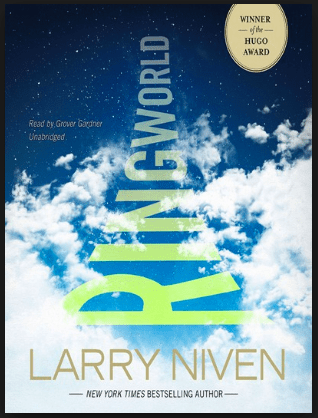
Ringworld by Larry Niven | Review

NIven, Larry_Ringworld

Publication: Ashland : Blackstone Audio, Inc., and Buck 50 Productions, LLC, 2005 (Originally published by New York : Ballantine Books, 1970)

Genre: Science Fiction

Audio Length: 11 hours, 15 minutes | Pages: 342

Formats: Paperback, Audiobook

Source: MCL

This novel carries memories of following my father into a secondhand bookstore in San Francisco in my early teens. The year before, he’d introduced me to the wonders of Yessongs during a long business trip car ride through the dusty plains of the Midwest. These are my people, I selfishly thought to myself. But I didn’t finally pick this one up until earlier this year (stop gasping). I think I now understand my engineering father’s enthusiasm. This is an engineer’s fantasy in space.

In today’s world of women’s liberation, however, Niven might have a lot to learn. Even as he tries to let the one female character in his novel come into her own, in the end she still needs a male counterpart to help her self-actualize. This seems indicative of our species’s epidemic of sexism. The creativity from an engineering perspective, as well as the alien characterizations (since none of these are of the female persuasion, I feel okay saying this), are some of SF’s finest. It’s good to observe the steady flow of our gender awakening horizons’ expanding, though, as I’ve been pleased to find in the writings of such as Ursula K. Le Guin and Jo Walton.

virtual takeover | 2018.06.27

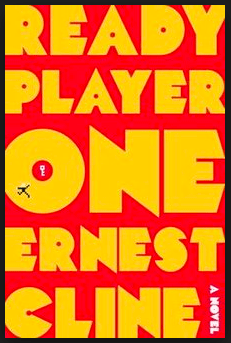
Ready Player One by Ernest Cline | Review

Cline, Ernest_Ready Player One

Publication: New York : Crown Publishers, ©2011

Genre: Science Fiction

Pages: 374

Formats: Paperback, eBook, Audiobook

Source: MCL

This one is pure fun, my fellow readers. Reminiscence is in vogue, and Cline leans hard in that area. The book whirls from catastrophe to near demise of the main characters at every page-turn. So if you’re looking for a great escape filled with reminders (or perhaps introductions, for those hailing from a younger generation) of 80s video games and cult classic sci-fi and fantasy films, this book has it all. Does it go any deeper? It certainly brushes up against the age-old fears of the loss of authentic human interactions in the attractive wake of virtual reality. And we all know how that story goes (even this writer here got her start in the early 90s with a similar such cautionary tale disguised as a Ray-Bradbury-slash-Ursula-K.-Le-Guin-wannabe short story).

And who doesn’t want to recreate their identity within the anonymity of a video game? Okay, maybe not all of us. As a self-reporting non-gamer, I was still amazed at the allure this book held as I raced through its chapters, even sneaking furtive reading sessions at barbecues, to my neighbors’ amused annoyance. And the ending? Well, I find it difficult to write reviews on books I wouldn’t recommend, so I’ll let you take the journey. (Please note, I’ve been warned against watching the film version, but only because the references were more geared toward a younger, more movie-centric audience, an accommodation a lot of original fans of the book were disappointed by. I’ll let your preferences be your guide. This is, remember, a book review website. I’ll leave the movie reviews to the professionals of that medium.)